
Hot Keywords:
Views: 0 Author: Site Editor Publish Time: 2025-07-31 Origin: Site


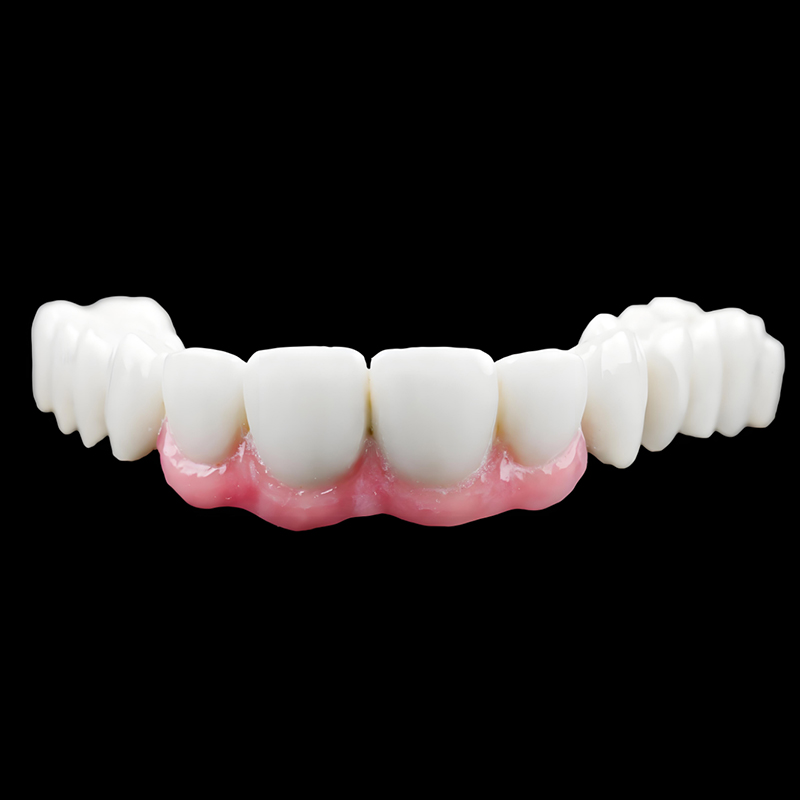
Fabrication Process of Fixed Dental Prostheses Using PMMA: A Comprehensive Guide
Polymethyl methacrylate (PMMA) is increasingly utilized in fixed dental prostheses, such as crowns, bridges, and veneers, due to its aesthetic versatility and ease of modification. While ceramic materials dominate permanent restorations, PMMA serves as a reliable interim or diagnostic solution. The following outlines the step-by-step workflow for crafting PMMA-based fixed prostheses.
The process begins with precise tooth preparation, where the dentist reshapes the abutment teeth to accommodate the prosthesis. This involves reducing enamel uniformly to create space for the PMMA material while preserving tooth vitality. The preparation design varies based on the type of restoration—full-coverage crowns require more reduction than veneers or onlays.
After preparation, a detailed impression is captured using elastomeric materials like addition silicone or polyether. The impression must include the prepared tooth, adjacent structures, and opposing arch to ensure accurate occlusion. A triple-tray technique or dual-arch impressions may be employed for efficiency. The impression is then poured in dental stone to produce a definitive cast, which serves as the foundation for the prosthesis design.
Modern workflows often integrate digital technology for prosthesis design. The cast is scanned using an intraoral or laboratory scanner, generating a 3D model. Software tools allow for virtual design of the PMMA prosthesis, including margin definition, occlusal adjustments, and esthetic contouring. This digital approach enhances precision and reduces manual errors.
For analog workflows, the prosthesis is designed directly on the stone cast using wax. A wax pattern is carved to mimic the natural tooth anatomy, ensuring proper emergence profile and contact points. The wax pattern is then invested in a refractory material and subjected to a burnout process to eliminate wax residues. This creates a mold cavity for PMMA injection or packing.
PMMA resin is prepared by mixing powder and liquid components according to the manufacturer’s instructions. For injection molding, the resin is loaded into a cartridge and heated until it reaches a flowable consistency. It is then injected into the preheated mold under pressure, ensuring complete filling of the cavity without voids.
Alternatively, the packing technique involves placing the PMMA dough into the mold manually. A mylar strip or celluloid matrix may be used to shape the prosthesis and prevent adhesion to the mold. The assembly is cured in a heat-activated unit or under specific conditions recommended for the resin type. Controlled curing prevents warping and ensures optimal physical properties, such as strength and color stability.
Once cured, the PMMA prosthesis is retrieved from the mold and trimmed to remove excess material. Rotary instruments or hand files are used to refine the margins and adjust the fit on the cast. The prosthesis is then seated on the prepared tooth for a trial evaluation, checking for passive fit and stability.
Polishing is critical to achieving a smooth, glossy surface that resists plaque accumulation. The process involves sequential use of abrasive discs, rubber points, and polishing pastes. The final polish enhances esthetics and mimics the luster of natural enamel. Occlusal adjustments are made using articulating paper to identify premature contacts, ensuring balanced function with the opposing dentition.
Before permanent cementation, the prosthesis undergoes a final intraoral check. The dentist evaluates marginal integrity, esthetics, and phonetics, making minor modifications if necessary. The internal surface of the prosthesis is treated with airborne-particle abrasion or chemical conditioners to improve bond strength with the cement.
A luting agent compatible with PMMA and tooth structure is selected, such as resin-modified glass ionomer or self-adhesive resin cement. The prosthesis is cemented under controlled pressure to ensure complete seating. Excess cement is removed, and the occlusion is verified once again. Patients receive instructions on oral hygiene and maintenance to prolong the lifespan of the PMMA restoration.
By following these structured steps, dental professionals can produce PMMA-based fixed prostheses that meet functional and esthetic requirements. The material’s adaptability makes it suitable for short-term or transitional restorations, while its workability allows for efficient intraoral adjustments.


