
Hot Keywords:
Views: 0 Author: Site Editor Publish Time: 2025-07-25 Origin: Site


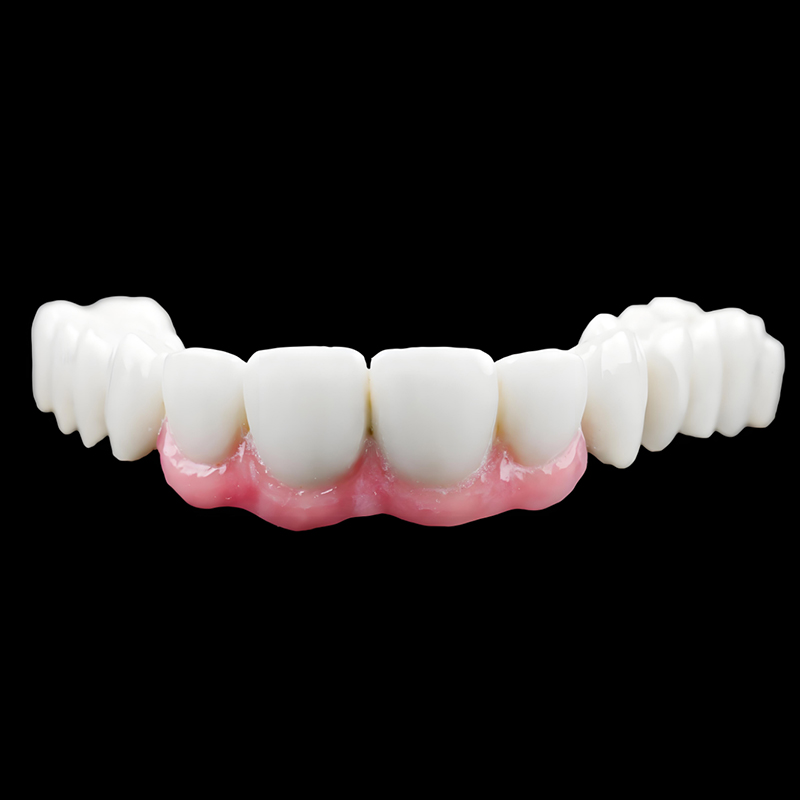
Surface roughness is a defining characteristic of dental PMMA, influencing its interaction with oral microorganisms and long-term clinical outcomes. Studies demonstrate that PMMA surfaces with arithmetic mean roughness (Ra) values exceeding 0.2 μm exhibit significantly higher microbial adhesion compared to smoother counterparts. For instance, Staphylococcus aureus, a bacterium associated with denture-induced stomatitis, shows a 40% increase in adhesion on rough PMMA surfaces. This correlation stems from the ability of irregular surface topographies to trap salivary proteins and create protective niches for biofilm formation.
Scanning electron microscopy (SEM) analysis reveals that PMMA surfaces polished to Ra < 0.2 μm display minimal microbial colonization, whereas those with Ra > 0.5 μm develop dense biofilms within 24 hours. The roughness threshold aligns with clinical observations that patients using poorly polished dentures report higher rates of oral mucosal inflammation. Furthermore, rough surfaces exacerbate plaque accumulation, leading to secondary complications such as caries on abutment teeth and periodontal tissue breakdown.
The surface roughness of dental PMMA is heavily influenced by fabrication techniques. Traditional heat-curing methods, which involve water bath polymerization at 70–100°C, often produce surfaces with Ra values ranging from 0.3 to 0.6 μm due to residual monomer evaporation and thermal gradients. In contrast, microwave-assisted polymerization reduces roughness by 25% through uniform heat distribution, achieving Ra values as low as 0.25 μm.
Computer-aided design/manufacturing (CAD/CAM) technologies have revolutionized PMMA surface quality. Milling processes using diamond burs generate surfaces with Ra < 0.2 μm, while 3D printing via digital light processing (DLP) produces layered structures that require post-processing to eliminate stair-stepping artifacts. A 2025 study comparing CAD/CAM-milled PMMA to injection-molded alternatives found that the former exhibited 30% lower roughness and 50% reduced Candida albicans adhesion after 7 days of intraoral exposure.
To address roughness-related challenges, researchers have developed advanced surface modification techniques. Chemical polishing using light-activated agents reduces Ra by 40% without thermal damage to the acrylic matrix. This method involves applying a photopolymerizable resin containing nano-sized abrasives, followed by curing under LED light to create a glossy, microbially resistant surface.
Plasma treatment represents another innovative approach. Oxygen plasma etching increases surface energy while simultaneously smoothing PMMA by removing amorphous layers. A 2025 investigation reported that plasma-treated PMMA dentures maintained Ra < 0.15 μm after 6 months of clinical use, compared to 0.35 μm for untreated controls. Additionally, plasma-functionalized surfaces demonstrate enhanced wetting properties, improving salivary lubrication and reducing friction-induced mucosal trauma.
The incorporation of nanoparticles into PMMA matrices offers a multifaceted solution to roughness management. Adding 0.5% wt nanodiamond particles reduces surface roughness by 18% through a roll-slip mechanism that minimizes direct contact between opposing surfaces. Simultaneously, these nanoparticles impart antimicrobial properties by disrupting microbial cell membranes, as evidenced by a 60% reduction in Streptococcus mutans colonization on nanodiamond-modified PMMA.
Silver nanoparticles (AgNPs) also show promise in roughness optimization. When dispersed at 0.2% wt, AgNPs create a nanostructured surface that lowers Ra to 0.12 μm while releasing bioactive ions that inhibit quorum sensing in oral pathogens. However, challenges persist in achieving uniform nanoparticle distribution, as agglomeration can inadvertently increase localized roughness. Advanced sonication techniques and surfactant stabilization are being explored to overcome this limitation.
Controlling PMMA surface roughness has direct implications for patient care. Smoother surfaces reduce denture movement during mastication, enhancing functional comfort and speech clarity. A 2025 clinical trial involving 120 patients found that those receiving low-roughness (Ra < 0.2 μm) PMMA dentures reported 35% fewer complaints of mucosal irritation compared to conventional materials.
From a biological perspective, roughness optimization influences oral microbiome dynamics. Reduced surface irregularities disrupt biofilm maturation by limiting nutrient retention and interbacterial communication. This effect, combined with antimicrobial nanoparticle integration, contributes to healthier periodontal tissues and lower caries risk in denture wearers. Furthermore, low-roughness PMMA exhibits superior color stability, as rough surfaces trap pigments from dietary sources and tobacco, leading to premature discoloration.
The next frontier in dental PMMA research involves smart materials capable of dynamically adjusting surface roughness in response to oral environmental changes. Shape-memory polymers embedded with thermoresponsive nanoparticles could increase surface lubricity during hot food consumption while maintaining rigidity at room temperature. Additionally, machine learning algorithms are being employed to predict optimal nanoparticle distributions for customized roughness control based on patient-specific occlusion patterns.
Sustainability considerations are also shaping roughness engineering strategies. Biodegradable reinforcement materials derived from cellulose nanocrystals and chitosan derivatives offer eco-friendly alternatives to synthetic nanoparticles. Early results show that these bio-based composites achieve roughness values comparable to ceramic-modified PMMA while demonstrating superior biocompatibility in preclinical models. As the field progresses, the integration of roughness optimization with other material properties—such as radiopacity and color stability—will define the next generation of dental PMMA systems.


