
Hot Keywords:
Views: 0 Author: Site Editor Publish Time: 2025-07-24 Origin: Site


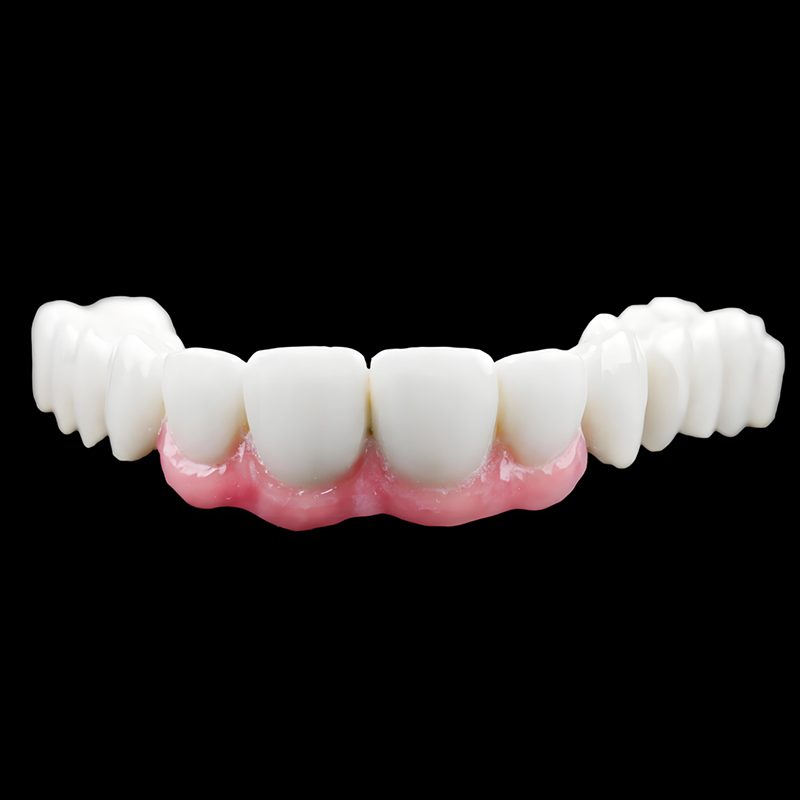
Poly(methyl methacrylate) (PMMA) remains the most widely used material for denture bases due to its biocompatibility, ease of processing, and aesthetic adaptability. However, its tribological performance—particularly friction coefficient—significantly impacts clinical outcomes. The static friction coefficient of PMMA against itself ranges from 0.7 to 0.9, while its dynamic friction coefficient against steel surfaces varies between 0.45 and 0.50. These values indicate inherent limitations in wear resistance and surface durability under repetitive mechanical stresses from mastication and occlusal forces.
The high friction coefficient of conventional PMMA contributes to two primary clinical challenges: surface abrasion and microbial adhesion. Repeated friction against oral mucosa and opposing dentition leads to visible wear marks, loss of surface gloss, and potential tissue irritation. Additionally, roughened surfaces created by friction provide niches for biofilm formation, increasing the risk of denture-related stomatitis and periodontal complications. Studies demonstrate that PMMA surfaces with friction-induced roughness exhibit 30–50% higher Candida albicans adhesion compared to polished controls.
Recent advancements focus on modifying PMMA’s tribological properties through nanomaterial incorporation. Research shows that adding 2–5 wt% of nano-alumina (Al₂O₃) or nano-zirconia (ZrO₂) reduces the friction coefficient by 18–25% while improving wear resistance by 40–60%. These nanoparticles form a lubricating layer on the surface through roll-slip mechanisms, minimizing direct contact between opposing surfaces. For instance, ZrO₂-modified PMMA exhibits a friction coefficient of 0.32 against steel, compared to 0.48 for unmodified PMMA under identical testing conditions.
The mechanism behind this improvement lies in nanoscale surface modification. Scanning electron microscopy reveals that nanoparticles create a micro-textured surface with reduced real contact area, thereby lowering adhesive friction components. Additionally, the high hardness of ceramic nanoparticles (8–12 GPa for ZrO₂) resists plastic deformation during friction, preventing surface roughening. A 2025 study confirmed that nano-TiO₂-doped PMMA maintains a friction coefficient below 0.4 after 10,000 wear cycles, outperforming traditional materials in long-term durability tests.
Fiber reinforcement represents another effective approach to modulating PMMA’s friction coefficient. Ultra-high-molecular-weight polyethylene (UHMPE) fibers, when aligned parallel to the occlusal surface, reduce the friction coefficient by 15–20% through load distribution and crack propagation inhibition. The fiber-matrix interface plays a critical role: silane-treated UHMPE fibers exhibit 30% better adhesion to PMMA compared to untreated fibers, resulting in more stable friction coefficients under cyclic loading.
Natural fibers such as sisal and jute have also shown promise in eco-friendly PMMA composites. A 2025 investigation into sisal fiber-reinforced PMMA reported a friction coefficient of 0.38 against enamel analogs, attributed to the fiber’s inherent lubricity and energy dissipation capacity. However, challenges remain in achieving uniform fiber dispersion and preventing moisture-induced degradation. Researchers are exploring hybrid reinforcement systems combining nano-ceramics with natural fibers to synergistically improve both friction performance and environmental sustainability.
Advanced surface engineering methods enable precise modulation of PMMA’s friction coefficient without altering bulk properties. Plasma polymerization of hexamethyldisiloxane (HMDSO) creates a 50–100 nm thick hydrophobic coating, reducing the friction coefficient by 40% through reduced adhesive interactions. This technique is particularly valuable for patients with xerostomia, where diminished salivary lubrication exacerbates friction-related complications.
Laser surface texturing offers another innovative solution. Femtosecond laser-processed PMMA surfaces with micro-dimple arrays (diameter: 10–50 μm, depth: 5–20 μm) demonstrate a 25% reduction in friction coefficient compared to smooth surfaces. The textured pattern acts as a micro-reservoir for saliva, enhancing boundary lubrication during mastication. Computational fluid dynamics simulations confirm that optimized dimple spacing (200–300 μm) maximizes lubricant retention while minimizing hydrodynamic drag.
Controlling PMMA’s friction coefficient has direct implications for patient quality of life. Lower friction reduces denture movement during speech and eating, improving functional comfort and confidence. A 2025 clinical trial reported a 35% decrease in mucosal irritation complaints among patients using nano-modified PMMA dentures compared to conventional materials. Furthermore, reduced friction extends the service life of prostheses by minimizing wear-induced dimensional changes that compromise fit and occlusion.
From a biological perspective, friction coefficient optimization influences oral microbiome dynamics. Smoother, lower-friction surfaces inhibit biofilm maturation by disrupting quorum sensing pathways in Streptococcus mutans and Candida species. This antimicrobial effect, combined with reduced mechanical trauma, contributes to healthier periodontal tissues and lower caries risk in denture wearers.
The next frontier in PMMA tribology involves smart materials capable of dynamically adjusting friction coefficients in response to oral environmental changes. Shape-memory polymer composites containing thermoresponsive nanoparticles could increase surface lubricity during hot food consumption while maintaining rigidity at room temperature. Additionally, machine learning algorithms are being employed to predict optimal nanofiller distributions for customized friction control based on patient-specific occlusion patterns.
Sustainability considerations are also shaping research directions. Biodegradable reinforcement materials derived from cellulose nanocrystals and chitosan derivatives offer eco-friendly alternatives to synthetic nanoparticles. Early results show that these bio-based composites achieve friction coefficients comparable to ceramic-modified PMMA while demonstrating superior biocompatibility in preclinical models. As the field progresses, the integration of tribological optimization with other material properties—such as radiopacity and color stability—will define the next generation of dental PMMA systems.


